From warehouse metadata to dependable AI insights.
Vizz Analytics started with a practical problem: warehouse data is valuable, but its business meaning is often scattered across SQL, spreadsheets, dashboards, and people’s memory. We built a governed semantic platform to make that meaning explicit, reviewable, and usable by both people and AI assistants.
1. Start with the warehouse, not a blank canvas
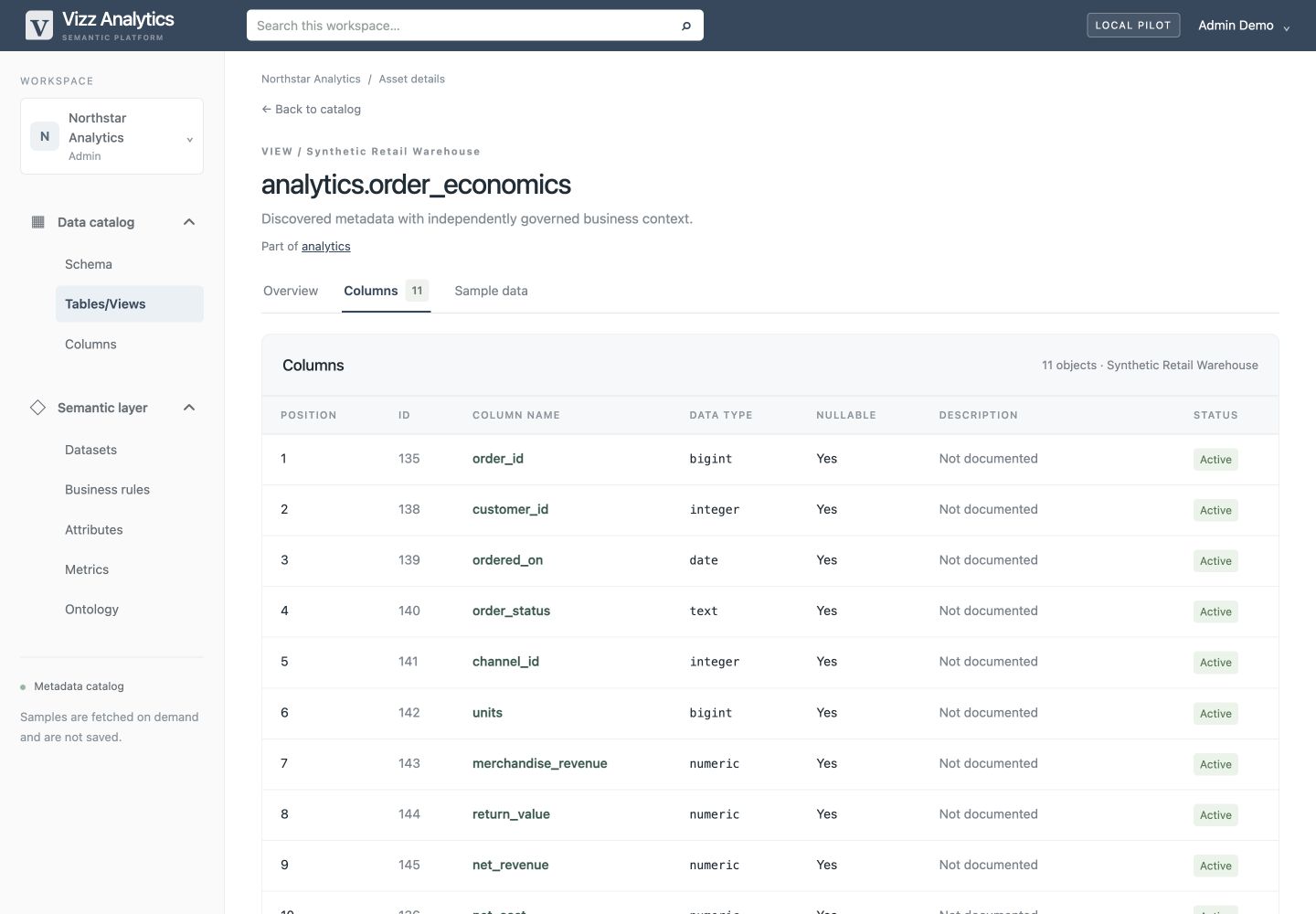
The first step was catalog ingestion. Vizz discovers schemas, tables, views, columns, types, comments, and source metadata without copying the warehouse’s business data into the platform. A scheduled ingestion keeps structure current while preserving the descriptions and decisions that people add later.
2. Turn metadata into shared definitions
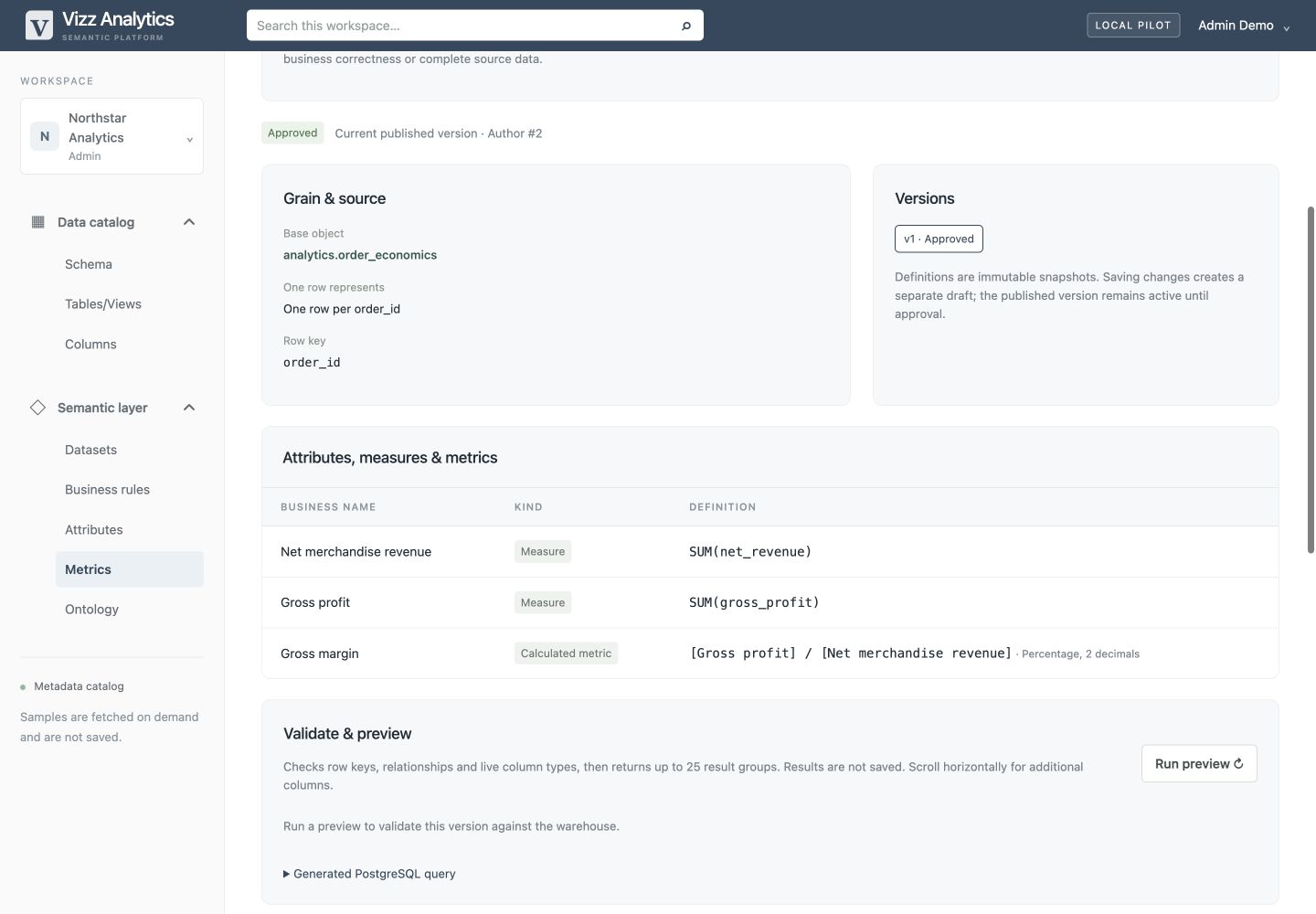
A table is not automatically a business concept. We added versioned semantic datasets, attributes, metrics, rules, and ontology entities. Each dataset records its grain, row key, dimensions, measures, filters, relationships, and time behavior. Calculations are represented explicitly instead of being left to an AI prompt.
3. Put review before publication
Every meaningful definition follows a draft → submit → independent review → publish workflow. Authors cannot approve their own submissions. Versions remain immutable, published definitions stay active while changes are reviewed, and audit history records who made and approved each decision.
The important design choice: Vizz does not ask an LLM to invent a definition and silently make it authoritative. Human input establishes the meaning; the system validates and executes it deterministically.
4. Execute governed queries
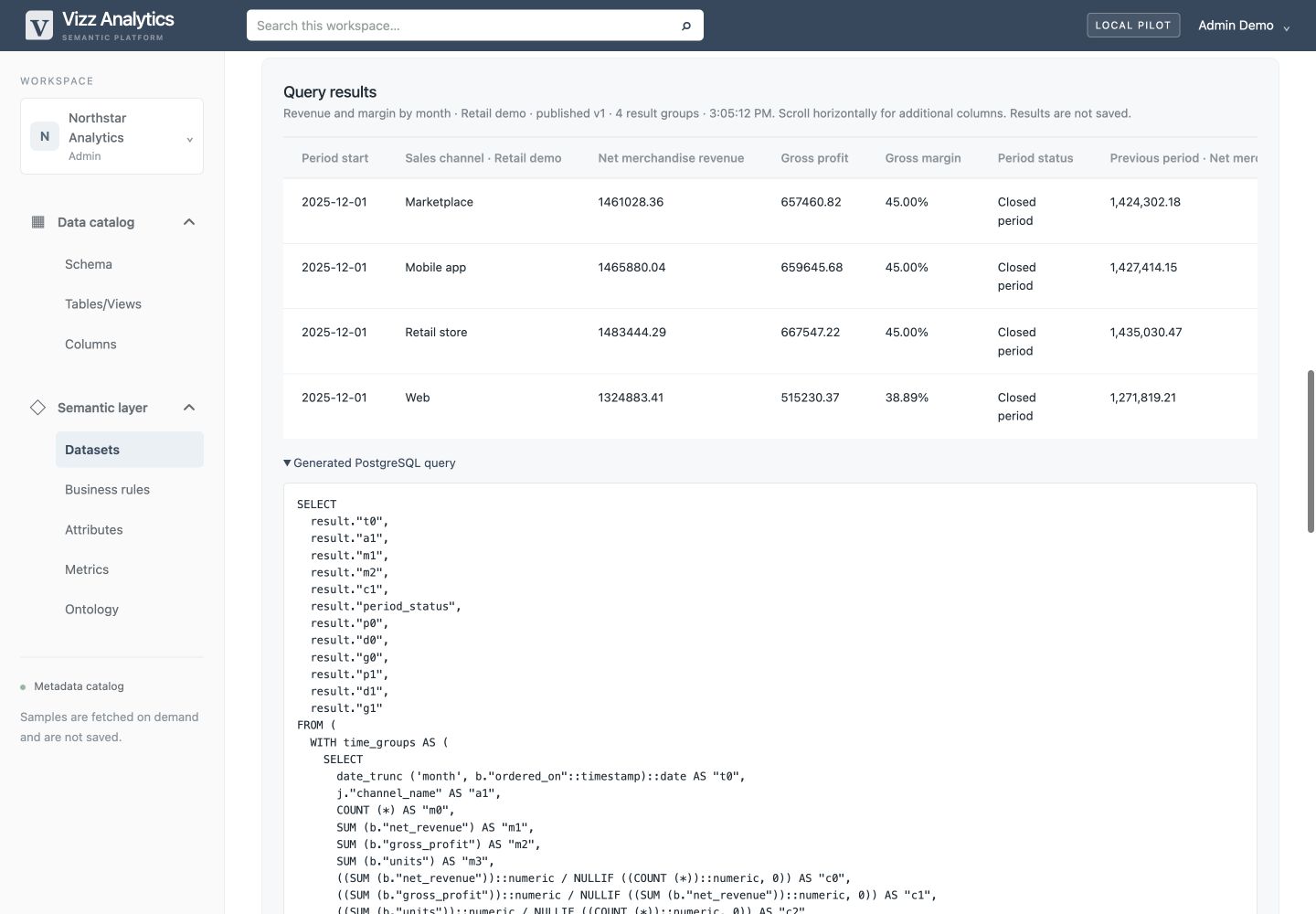
Once a definition is published, users can explore it through bounded, read-only queries. Vizz compiles the selected attributes, measures, filters, relationships, and time comparisons into warehouse SQL. The result includes the definition version and health context so users can inspect what produced the number.
5. Make the same meaning available to AI
The MCP server exposes governed discovery and query tools. An AI assistant can find published definitions, inspect their grain and dependencies, run an approved dataset query, and explain the result with version and health information. The assistant does not receive warehouse passwords, and it does not generate arbitrary SQL outside the governed query surface.
What we learned
- Semantic work is mostly organizational: definitions need owners, reviewers, and an explicit lifecycle.
- Deterministic rules are more valuable than impressive demos when a number affects a decision.
- AI becomes more useful when it can discover and apply shared meaning instead of guessing from raw column names.
- A good platform should make the safe path the easy path: bounded queries, immutable versions, visible dependencies, and clear health warnings.
Bring your own metric
The local pilot used synthetic data to illustrate the workflow. An early pilot starts with one metric your team wants to define and review together.